Bean to cup
How coffee gets from a farm to a London café, and who’s paid what on the way.
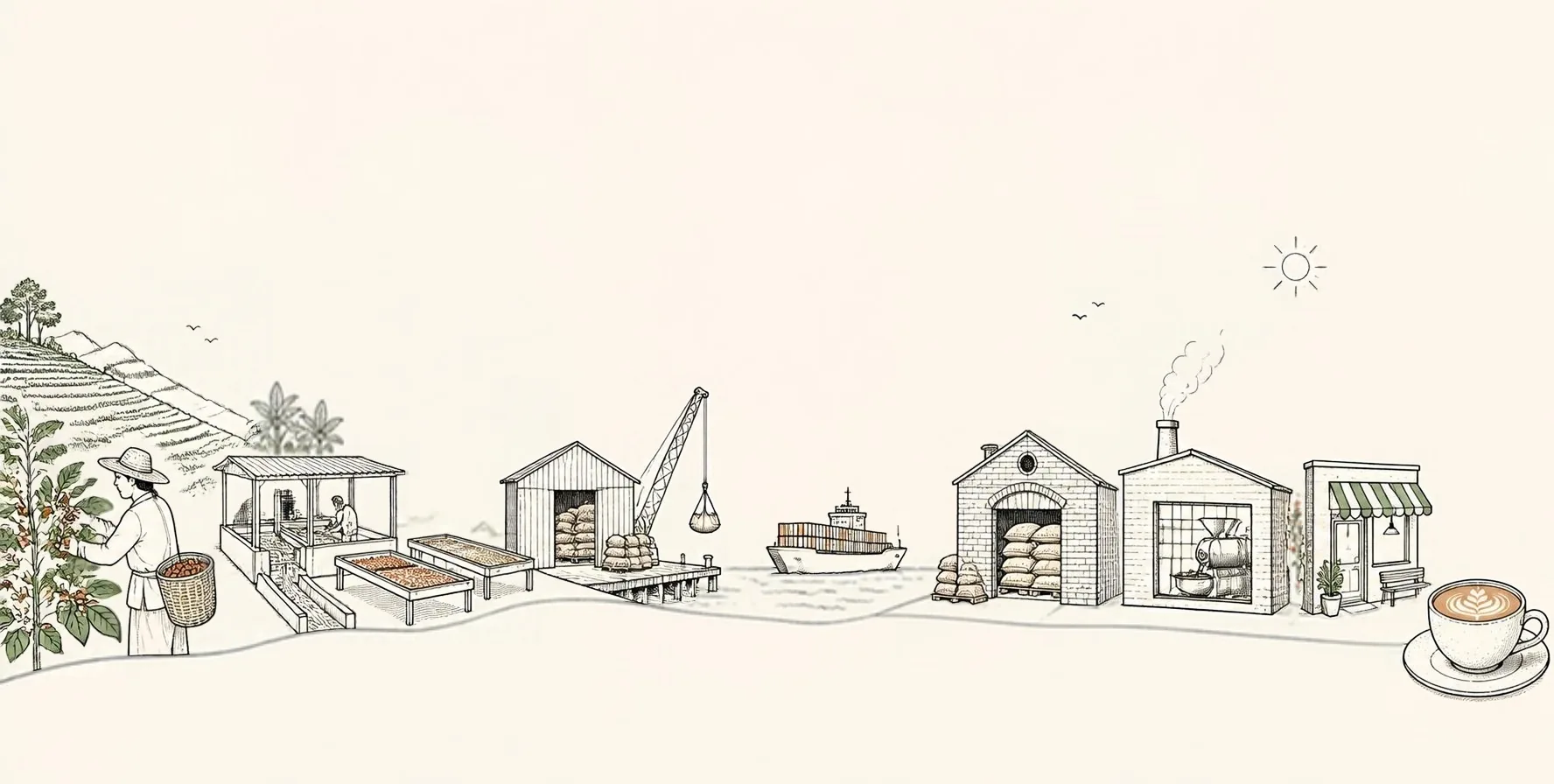
Nobody in London gets rich from your flat white. The squeeze is at the farm.
About 10p of your £4 reaches the people who grew the coffee. They carry most of the risk (a bad harvest, a price crash) and in most big coffee countries earn less than they need to live on. Most of the rest pays for London: wages, rent and VAT. The café keeps under 10p.
Prices are set on a global market and by a handful of big traders and roasters, not by your local café. In the early 1990s coffee-growing countries kept about 30% of what the world spent on coffee; now it’s about 10%. Tap Start at the farm to follow the coffee, or any stop on the picture. The two bars by each stop show the money (orange) and the carbon (grey-blue).
- Café staff£1.25
- VAT67p
- Café rent60p
- Café energy, card fees, other58p
- The roaster32p
- Milk20p
- Cup and lid14p
- Coffee farmers10p
- Café profit8p
- Washing, export, import8p
The café takes in about £2.85 but keeps under 10p; the rest pays its staff, rent and running costs. Rough figures, rounded.
A takeaway flat white comes to about half a kilo of CO₂e. Most of that is the farm and the milk, and the ship adds almost nothing. No café or roaster here publishes enough to compare them, so the guide doesn’t score climate.
- 1 The farm240g
- 2 Picking and washing100g
- 4 The crossing3g
- 6 The roaster10g
- 7 The café (milk, cup)200g